The label
EU AI Act machine-readable marking is in force since August 2026; California SB 942 since January.
Read the EU AI ActAuthorship infrastructure
An AI research staff that's forbidden from writing for you, a writing room built for the work, and a notary in the back room. You write every word. The work ships with proof.
Private beta · No spam · Built for human authors
The problem
EU AI Act machine-readable marking is in force since August 2026; California SB 942 since January.
Read the EU AI ActUS courts reaffirmed in March 2026: no human authorship, no copyright; prompting isn’t authorship.
Read the rulingMagazines and contests ban AI prose; detectors accuse honest writers and can't clear them. Handmark can.
See the reportingA guided process
Turn a question into a landscape of ideas. You choose what deserves attention.
Bring in sources within a scope you define. No invisible browsing.
Arrange, write, and resolve each critique. Your decision is the gate.
The fence
Handmark treats AI like research staff. It can bring material to your desk and ask hard questions about a draft. It cannot cross the fence and write in your voice.
AI STAFF
Research, structure, critique
YOU, THE AUTHOR
Every word of expression
The record of making
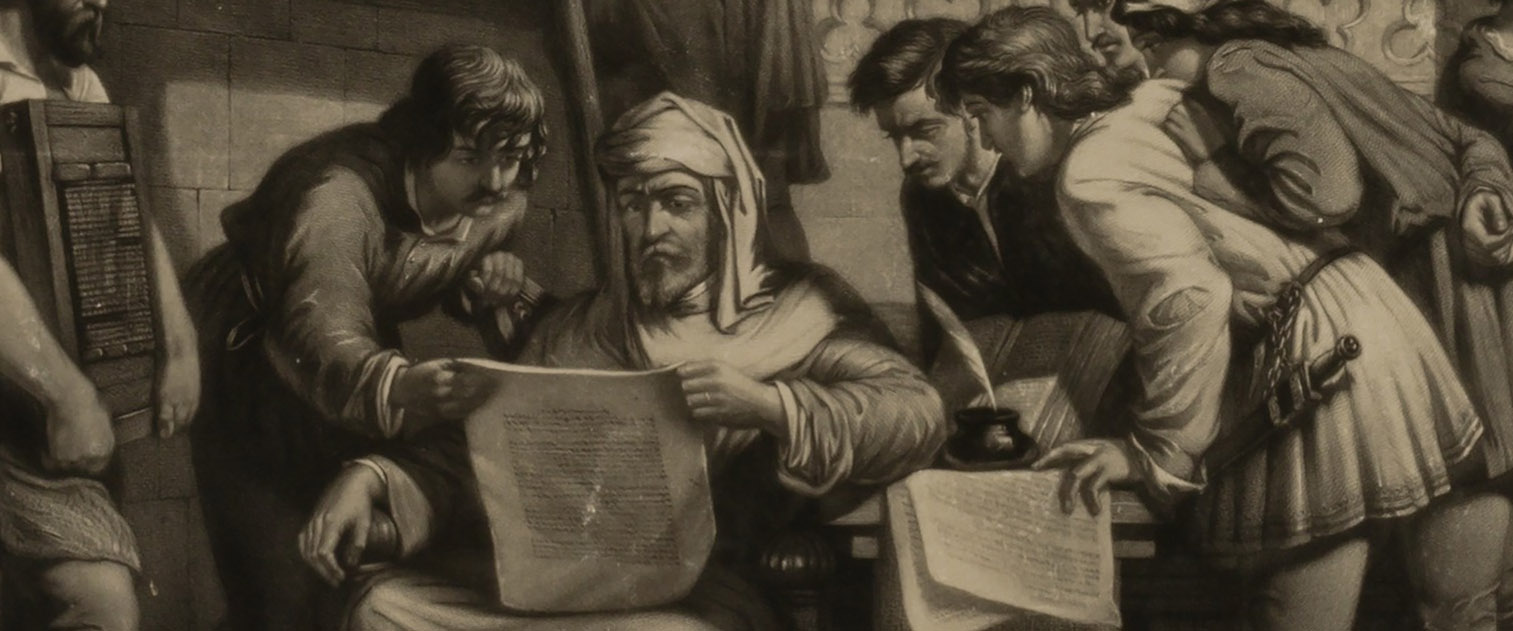
William Caxton reads his first proof sheet. Westminster Abbey, 1474. New tool, same standard.
Frederick Bacon, after Edward Henry Wehnert. Smithsonian American Art Museum, 1966.48.8, Gift of International Business Machines Corporation.
Content credential
68491b90-2ef9-403a-8cb0-cd7817629175 + 06/17/2025 13:43:15
Grade A+ · Instrumented editor · Coverage 100% · Human-typed 1,840 words · Signature valid.
The certificate proves the recorded process and states its coverage.
The export
Every stage is recorded in a tamper-evident ledger. When you export, your work carries a signed certificate built on the C2PA standard behind Content Credentials.
See the verification registerMade for the named author
Show how sources informed the work without confusing assistance for authorship.
Keep the thinking and the voice yours, from first ideas cloud to final line.
Fiction has the most to lose. Plot help is safe, prose isn’t, and Handmark knows the difference.
Your readers subscribe to a person, not a feed. Every issue can ship with the mark that proves the voice they pay for is yours — thinking sharpened by research, every word in your hand.
Questions, answered
No. Handmark can generate research, analysis, and critique, but never finished prose. Every word of the work you publish is typed by you.
It records the stages of your process, the AI contributions, and the authored expression. The export is signed using the C2PA Content Credentials standard.
Yes. You choose the source boundary and write the rules your draft should be checked against. Handmark keeps those decisions in the record.
No — detection guesses after the fact and can't clear you; Handmark records authorship as it happens.
It documents human authorship on the C2PA standard — strong evidence, not a legal guarantee; talk to a lawyer for your situation.
Anyone publishing under their own name: independent writers, researchers, journalists, educators, and teams that need a defensible authorship trail.
Contact
Questions about the private beta, verifier policies, or authorship records? Send a note directly to David.
The private beta
We're inviting a small group of named authors.